
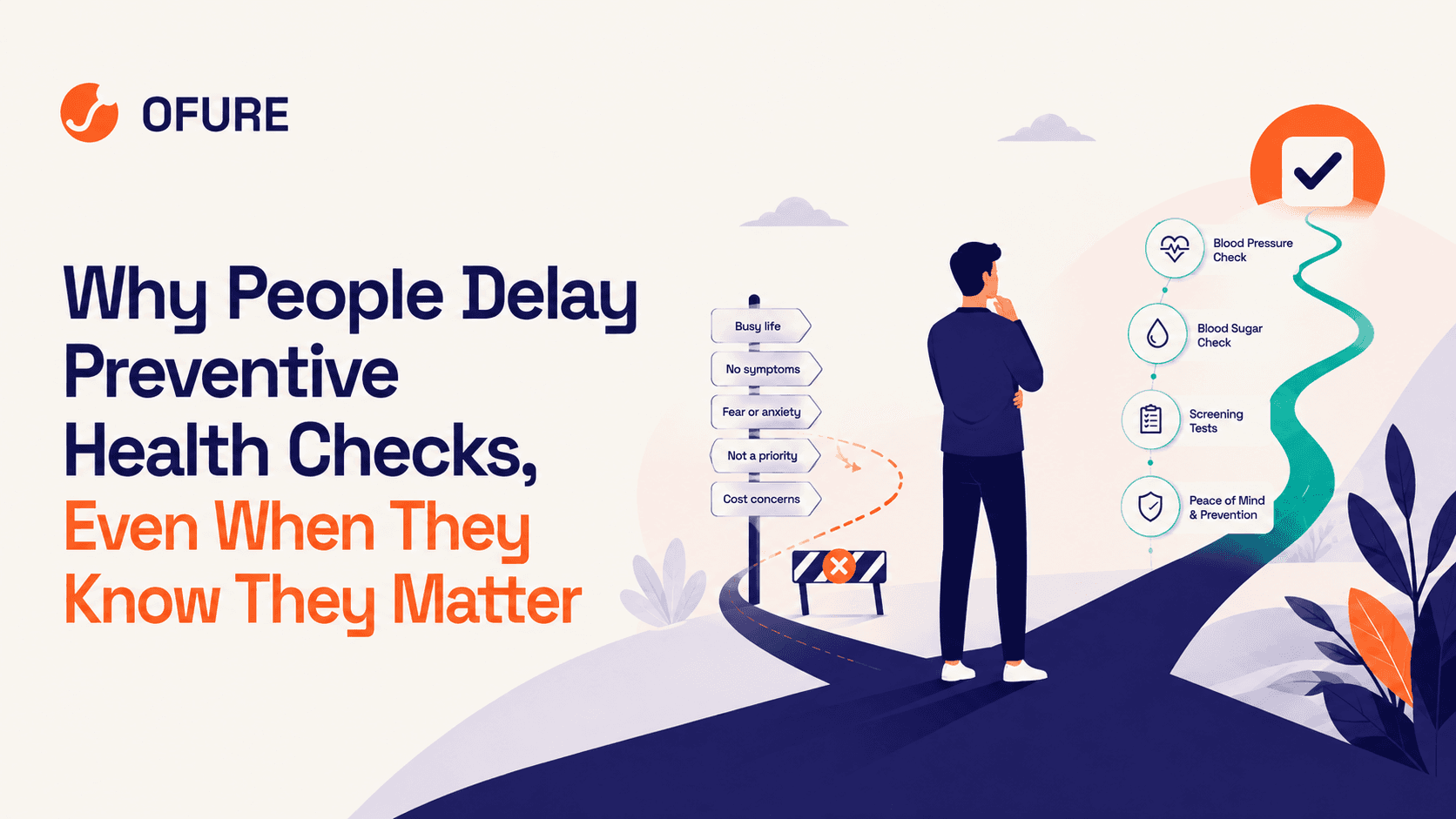
Most people understand that checking their health before they feel unwell can be important. Yet knowing that a blood pressure check, blood sugar test or cancer-related preventive action matters does not always lead to completing it.
Between receiving health information and taking action, a person may need to decide where to go, understand what the service costs, arrange transport, make time for an appointment and prepare for what may happen if the result requires further care.
This creates a gap between knowing what matters and completing what comes next.
That gap is not simply a matter of people being careless about their health. Preventive action can be influenced by a combination of personal, financial, practical and healthcare-system factors.
Preventive health often begins before symptoms
One reason people delay preventive checks is simple: they feel well.
High blood pressure often causes no noticeable symptoms. The World Health Organization’s guidance on hypertension explains that measuring blood pressure is the only way to know whether it is raised. Without a check, someone may live with hypertension without realising it.
Diabetes can also remain undetected, particularly during its earlier stages. According to the World Health Organization’s diabetes fact sheet, the number of people living with diabetes increased from 200 million in 1990 to 830 million in 2022, with prevalence rising more rapidly in low- and middle-income countries.
These conditions demonstrate why feeling healthy does not always mean that a relevant preventive action should be postponed.
Preventive health is not about assuming that something is wrong. It is about identifying appropriate checks, understanding individual risk and acting early enough for a qualified healthcare professional to provide guidance where needed.
Knowing is not the same as acting
Health campaigns frequently encourage people to attend screenings, check their blood pressure or speak to a healthcare professional about their risks. Awareness is important, but information alone may not be enough.
A person may understand that a check is advisable but still be unsure which check is appropriate, whether it applies to their age or circumstances, where the service is available, whether an appointment is required, what it will cost, how to prepare or what should happen after the result.
A systematic review examining barriers to breast, cervical and colorectal cancer screening found that participation can be affected by factors including knowledge, socioeconomic circumstances, access to services, communication and people’s experiences of healthcare. The importance of individual barriers varies across populations and settings.
This means that a message telling someone to “get screened” or “know your numbers” may only begin the journey. The person must still find a practical route from that message to a completed action.
Why preventive actions may be delayed
There is rarely one explanation. Several barriers can affect the same person at the same time.
Feeling well can reduce the sense of urgency
When someone has no obvious symptoms, a preventive action can appear less urgent than work, family responsibilities or immediate expenses. The possible benefit may feel distant, while the inconvenience of taking action is immediate.
Health guidance may be difficult to interpret
Recommendations can depend on age, sex, medical history, family history, previous results and other risk factors. People may also encounter conflicting information online and become uncertain about which advice applies to them.
Fear can make delay feel easier
Some people postpone checks because they are worried that a health problem may be discovered. This fear is understandable, particularly when treatment costs, family responsibilities or previous experiences of healthcare are concerns.
However, postponing a check does not remove a possible health problem. It only delays the opportunity to understand it and obtain professional guidance.
The true cost may extend beyond the service itself
The cost of a preventive check may be only one part of the burden. Transport, time away from work, childcare, follow-up appointments and medicines may all influence whether someone completes the journey.
A service may technically be available but still be difficult to use if information about its location, opening times, requirements or price is unclear.
The healthcare journey may be fragmented
A preventive action rarely ends when someone receives a reminder.
The person may first need to understand why the action matters, identify an appropriate provider, arrange a booking, prepare for the appointment, attend the service, receive the result and complete any recommended referral or follow-up.
When different organisations manage different stages, the individual or family is often left to connect them.
Previous experiences can affect trust
Long waiting times, unclear communication, dismissive treatment or uncertainty about confidentiality can reduce a person’s willingness to return.
Trust is not created by information alone. It also depends on whether people feel respected, understand what is happening and can see a realistic next step.
Some people need practical support
A person may need help arranging transport, remembering an appointment, paying for a service, collecting medication or following up a referral.
Trusted family support can help, but it should always reflect the individual’s permission and preferences.
The real challenge is completion
Public-health action often focuses on awareness, but the full journey continues far beyond awareness.
A useful way to understand it is:
Awareness → decision → service selection → booking → attendance → result → follow-up
A person can become delayed or disengaged at any stage.
The World Health Organization’s guidance on noncommunicable diseases places early detection, screening, diagnosis and treatment within a connected approach to managing long-term health conditions.
This is why the number of people who see a health message or begin a registration process does not tell us whether care was completed. The more meaningful question is whether people reach the relevant service and complete any necessary next step.
What can make preventive action easier?
No single intervention will remove every barrier. However, the journey can become easier when people receive practical support rather than information alone.
This may include a clear explanation of why an action is relevant, clinically reviewed guidance, verified information about appropriate services, transparent preparation requirements, appointment reminders, booking support, referral tracking and follow-up when an action is missed.
It can also include simple ways to show whether an action is due, booked or completed, as well as the option to involve a trusted family member where the individual gives permission.
Digital tools may help organise these steps, but technology should support the healthcare journey rather than replace professional care.
A practical question to ask yourself
Think about the last health check, screening, refill, referral or follow-up you intended to complete.
Ask yourself whether you know what action is needed, why it matters, when and where it should be completed, how to prepare, what it may cost and what should happen afterwards.
When any of these answers is unclear, the problem may not be a lack of motivation. The next step may simply be too difficult to identify or complete.
The Ofure perspective
Ofure is being built to help individuals and families identify important preventive and follow-up health actions and complete them across otherwise disconnected services.
Our focus is not simply to send another health reminder. It is to help turn a relevant health need into a clear journey: understand the action, find an appropriate service, track what has been completed and remain supported through what comes next.
Ofure does not diagnose conditions, interpret complex clinical results or replace qualified healthcare professionals.
Help people act early and complete every important step.
This article provides general health information and is not a substitute for individual medical advice, diagnosis or treatment. Speak with a qualified healthcare professional about the checks or services appropriate for your circumstances. Seek urgent medical help if you are seriously unwell or experiencing concerning symptoms.