
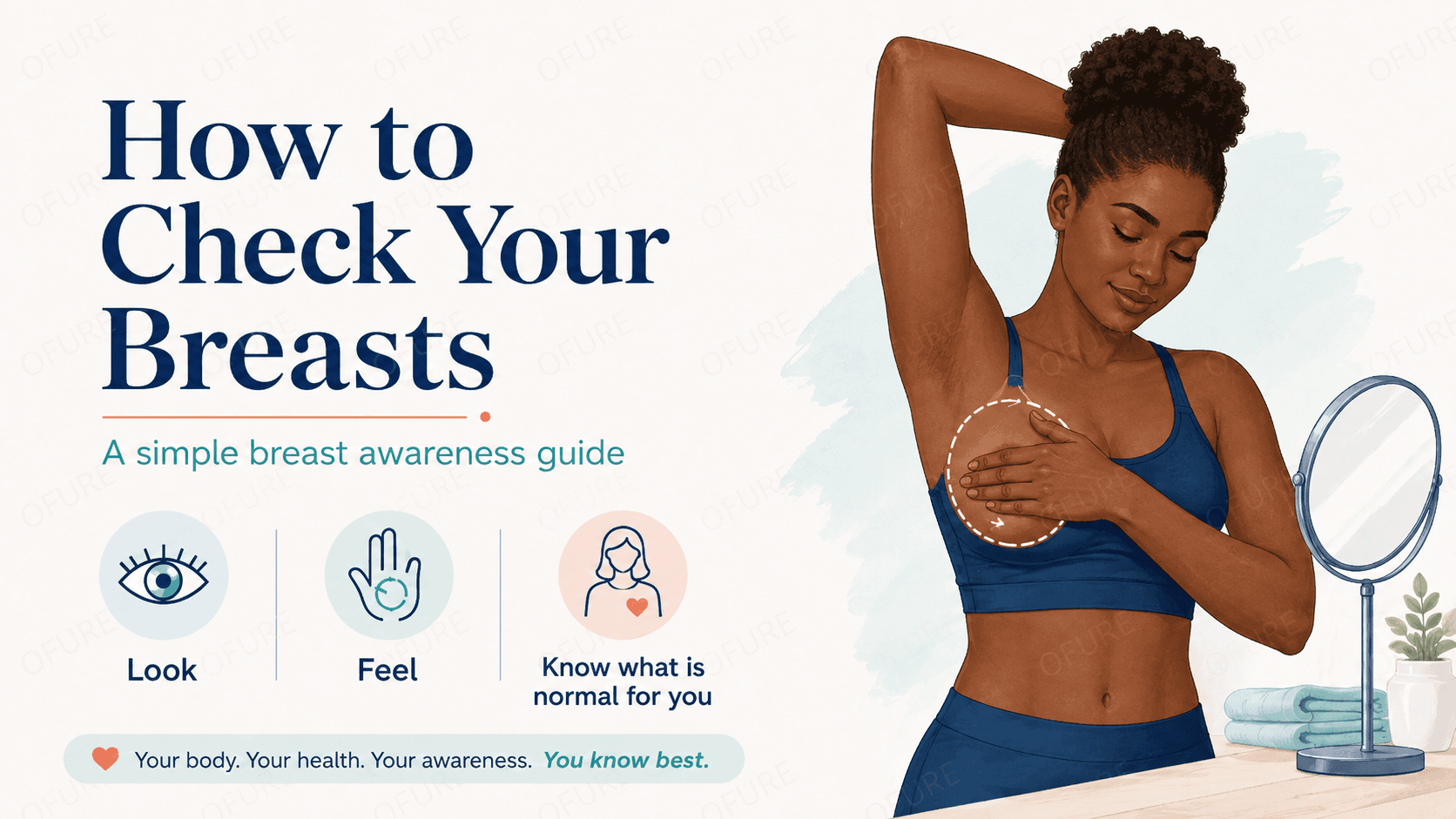
Checking your breasts regularly can help you become familiar with how they normally look and feel, making it easier to notice something new or unusual. You do not need a special technique or training.
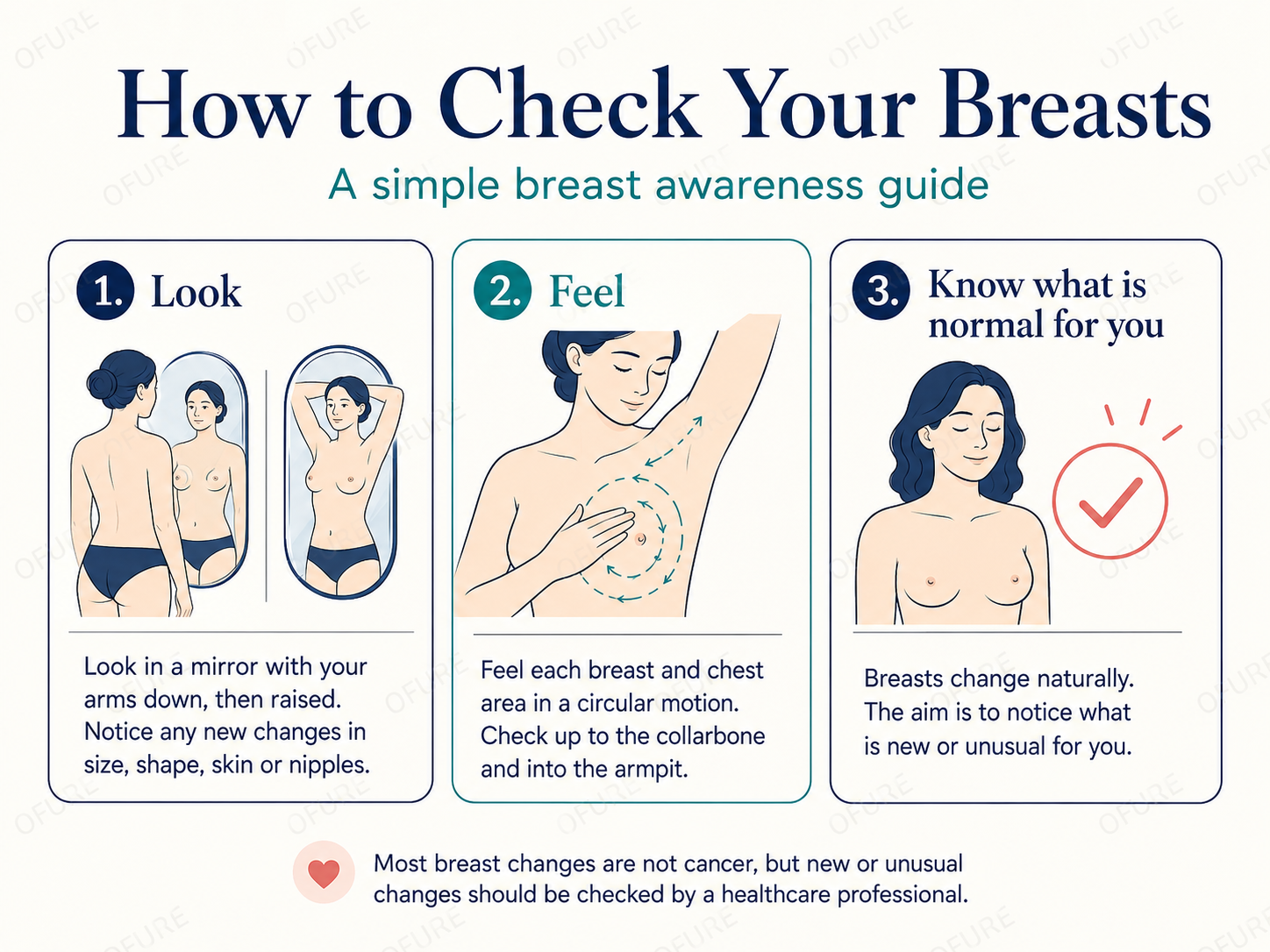
1. Look
Stand in front of a mirror and look at your breasts or chest.
Look first with your arms by your sides, then raise your arms. Notice whether there are any new changes in the size, shape, skin or nipples.
2. Feel
Using your fingers, feel around each breast or side of your chest in a circular motion.
Check the whole area:
breast → upper chest to the collarbone → under the armpit → around and over the nipple
Use a mixture of light and firmer pressure, but do not press so hard that it hurts.
3. Know what is normal for you
Breasts can naturally look and feel different at different times, including during the menstrual cycle.
The aim is not to search for one particular type of lump. It is to become familiar with your own breasts so that you are more likely to recognise a new or unusual change.
What changes should you look out for?
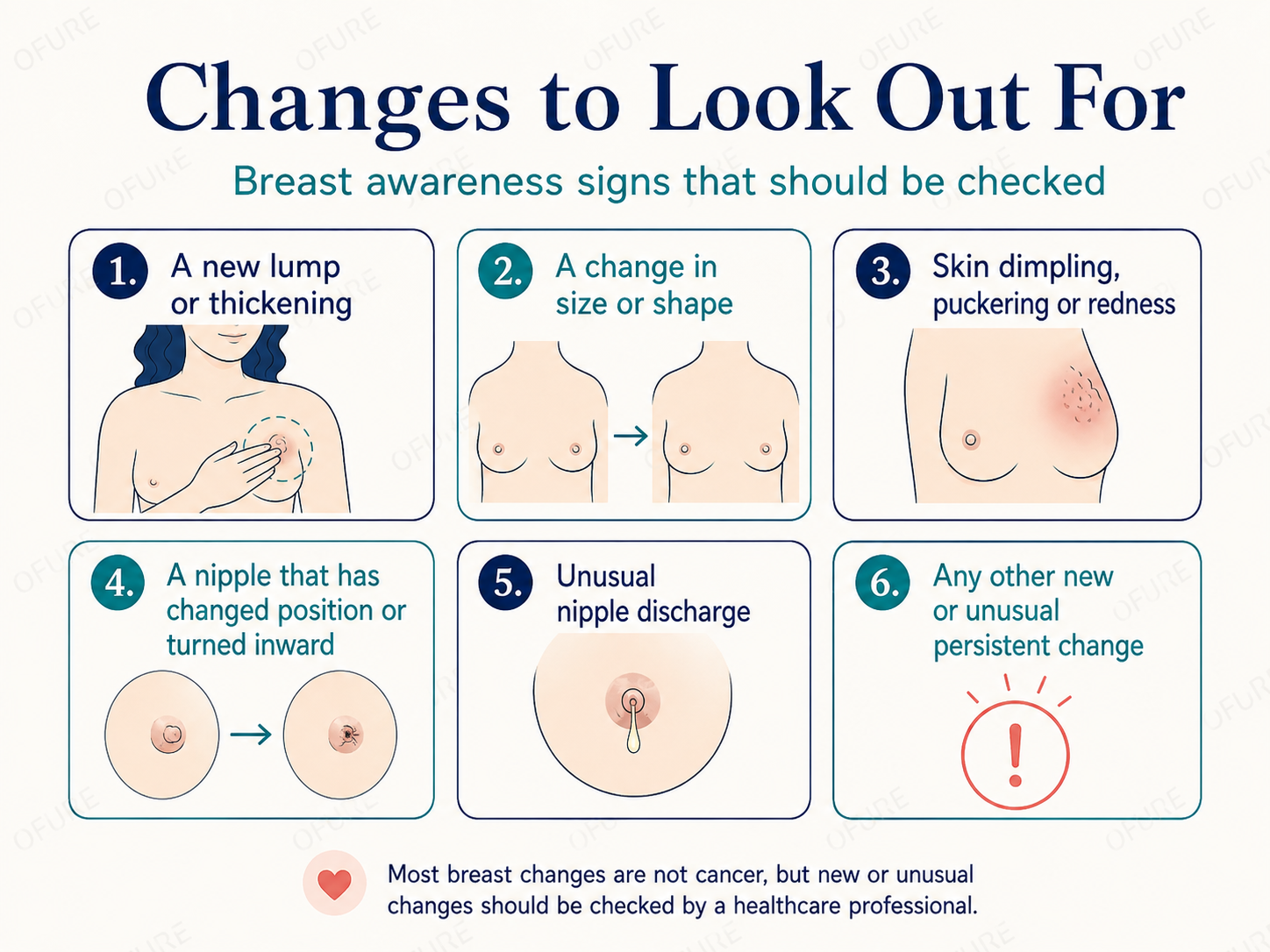
Speak with a qualified healthcare professional if you notice a new or unusual change, including:
a lump or thickening in the breast, chest or armpit
a change in breast size or shape
dimpling, puckering, redness or another skin change
a nipple that has changed position or become pulled inward
unusual nipple discharge
any other persistent change that is not normal for you.
Most breast changes are not cancer, but it is important to have a new or unusual change professionally assessed rather than trying to diagnose it yourself.
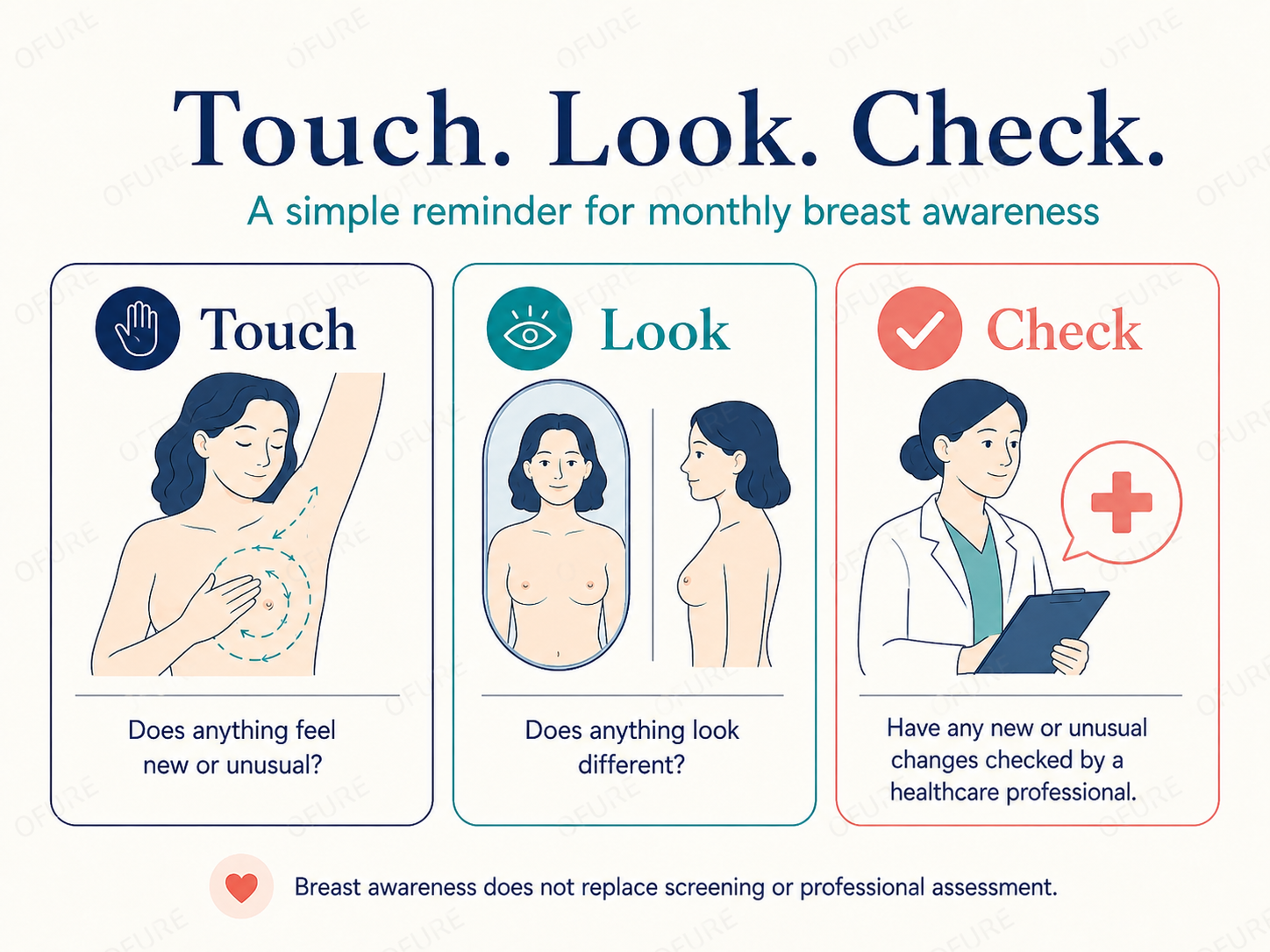
Remember: Touch, Look, Check
Breast Cancer Now uses a simple reminder:
Touch: Does anything feel new or unusual?
Look: Does anything look different?
Check: Have any new or unusual changes checked by a healthcare professional.
Important
Checking your breasts does not replace breast screening, mammograms or professional assessment where these are recommended. Breast screening can identify some cancers before they can be seen or felt.
How Ofure can help
Ofure helps you make breast awareness a simple monthly habit. You can follow a guided journey, complete your monthly check-in and get support on what to do next if you notice a new or unusual change. Ofure does not diagnose breast cancer or replace professional medical advice.
This guidance is for general information and does not replace professional medical advice, diagnosis or screening.