
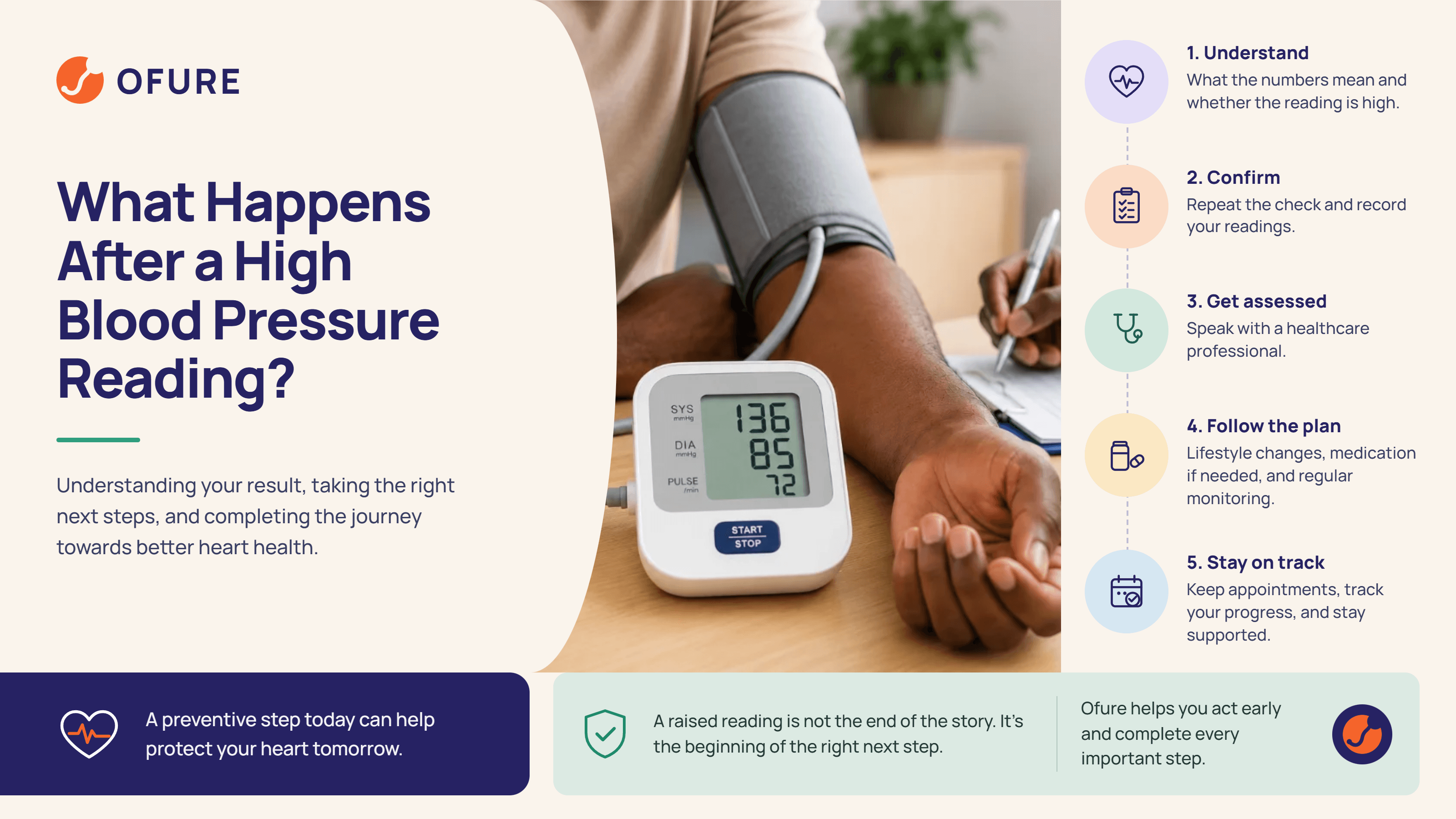
A blood pressure check may take only a few minutes, but the number it produces can raise several questions.
Is the reading genuinely high? Does it mean you have hypertension? Should you repeat the check? Do you need medication? Is it an emergency?
One raised reading can be important, but it does not always provide the complete picture. Blood pressure can be affected temporarily by stress, physical activity, pain, caffeine, smoking, certain medicines and even the experience of having it measured in a clinic.
What matters is understanding the result, checking it properly and completing any recommended follow-up.
First, what do the two numbers mean?
A blood pressure result is written as two numbers, such as 135/85 mmHg.
The first, or systolic, number measures the pressure in the blood vessels when the heart contracts and pumps blood.
The second, or diastolic, number measures the pressure when the heart relaxes between beats.
Both numbers matter. A qualified healthcare professional will interpret them alongside factors such as your age, health history, medicines, previous readings and cardiovascular risk.
Does one high reading mean you have hypertension?
Not necessarily.
The World Health Organization defines hypertension in adults as a systolic reading of at least 140 mmHg, a diastolic reading of at least 90 mmHg, or both, when elevated readings are recorded on two different days.
Different countries and professional organisations may use different thresholds or methods when assessing cardiovascular risk. This is one reason a single number should not be interpreted without considering the setting and the guidance being followed.
Where a clinic reading is raised but not at an emergency level, the next step may be to confirm it through repeated measurements, home blood pressure monitoring or a device that records blood pressure throughout the day and night.
For example, the UK’s National Institute for Health and Care Excellence recommends ambulatory blood pressure monitoring to confirm suspected hypertension when a clinic reading is between 140/90 mmHg and 180/120 mmHg. Home monitoring may be used when ambulatory monitoring is unsuitable or cannot be tolerated.
The specific approach available to you will depend on your location, healthcare provider and individual circumstances.
Why might the reading be temporarily high?
Blood pressure changes throughout the day. A reading may be affected by:
recent physical activity;
anxiety or stress;
pain or illness;
smoking or nicotine;
caffeine;
a full bladder;
talking during the measurement;
an incorrectly sized cuff;
an unsupported arm or incorrect sitting position;
or certain medicines and substances.
This does not mean a raised reading should be ignored. It means that accurate measurement and appropriate confirmation are important.
What should happen immediately after a raised reading?
The appropriate next step depends on how high the reading is, whether you have symptoms and whether you already have a diagnosis of hypertension.
1. Check that the measurement was taken correctly
Ideally, you should be seated calmly with your back supported, feet resting on the floor and your arm supported at approximately heart level.
The cuff should fit properly and be placed on bare skin rather than over clothing.
Where appropriate, the person taking the measurement may allow you to rest and then repeat the reading.
2. Record the result
Write down or securely save:
both blood pressure numbers;
the date and time;
where the reading was taken;
whether you had been resting;
any symptoms you were experiencing;
and any relevant medicines you had taken.
A single remembered number can easily become confused. A record allows a healthcare professional to identify patterns and compare readings over time.
3. Ask what the next step should be
Do not leave with only the information that your blood pressure was “high”.
Ask:
Should it be checked again today?
Should I monitor it at home?
When should I return?
Do I need a clinical assessment?
Are there symptoms that should prompt urgent help?
Should I bring a record of future readings?
Could any of my medicines affect my blood pressure?
A clear next step is more useful than a number without context.
When does a high reading require urgent attention?
A very high blood pressure reading can sometimes require urgent assessment, particularly when it occurs with concerning symptoms.
Seek urgent medical help when a very high reading is accompanied by symptoms such as:
chest pain;
severe shortness of breath;
sudden weakness or numbness;
difficulty speaking or understanding speech;
sudden changes in vision;
confusion;
fainting;
or a sudden, severe headache.
Sudden numbness, difficulty speaking, visual disturbance, loss of balance and severe unexplained headache can be warning signs of a stroke and require immediate medical care.
Do not wait for an online article, monitoring application or routine appointment when severe or sudden symptoms are present.
What may happen during a follow-up assessment?
A healthcare professional may:
repeat the blood pressure measurement;
ask about earlier readings;
review your medical and family history;
review your medicines and other substances;
assess your risk of heart and blood-vessel disease;
arrange home or ambulatory monitoring;
request blood or urine tests;
assess kidney function;
or investigate whether another condition may be contributing.
Not every person will need every investigation. The purpose is to determine whether the raised reading is persistent, understand your wider risk and decide what support or treatment may be appropriate.
What if hypertension is confirmed?
Confirmed hypertension does not automatically mean the same treatment for everyone.
A healthcare professional may recommend changes involving:
salt intake;
diet;
physical activity;
alcohol consumption;
smoking;
weight management;
sleep;
stress;
and prescribed medication.
WHO guidance supports the use of effective blood-pressure-lowering medicines and provides recommendations on when treatment may begin, treatment combinations and follow-up care. The appropriate decision should be made by a qualified professional based on the individual’s readings and overall risk.
Nigeria’s Federal Ministry of Health and Social Welfare has also emphasised early detection, management and prevention as part of its national response to hypertension.
Why follow-up matters
High blood pressure often causes no noticeable symptoms. A person may therefore feel well and still have persistently raised readings.
When hypertension remains uncontrolled, it increases the risk of serious health problems affecting the heart, brain, kidneys and other organs. WHO’s 2025 global report highlights the need to strengthen detection, treatment and control, particularly through primary healthcare.
The journey should therefore not end when the first reading is taken.
A complete journey may look like this:
Raised reading → repeat or confirm → clinical assessment → agreed plan → treatment or lifestyle support → monitoring → review
Missing any stage can leave the person uncertain about whether the issue was resolved.
What if you already take blood pressure medicine?
Continue taking prescribed medication unless a qualified healthcare professional tells you to change or stop it.
A high reading while taking medication may mean that:
the reading needs to be repeated;
doses have been missed;
another medicine or substance is affecting it;
the treatment plan needs review;
or additional assessment is necessary.
Do not double a dose, stop treatment or take someone else’s medication based only on one reading.
Record the result and contact the healthcare professional or service responsible for your care.
Your next-step checklist
After a raised blood pressure reading, make sure you can answer these questions:
What were the exact numbers?
Was the reading repeated correctly?
Do I have any concerning symptoms?
When and where should it be checked again?
Do I need home or ambulatory monitoring?
Do I need to speak with a healthcare professional?
What should I bring to the follow-up?
How will I record the next readings?
What happens after the follow-up assessment?
When these questions are unanswered, the health action is not yet complete.
The Ofure perspective
A blood pressure check is valuable, but the check alone is not the entire journey.
Ofure is being built to help individuals and families move from identifying an important health action to completing the appropriate next step. This may include recording the check, receiving a reminder, finding a suitable service, attending a review and tracking follow-up over time.
Ofure does not diagnose hypertension, prescribe treatment or independently interpret clinical results.
Its role is to help ensure that an important reading does not become a forgotten number.
A health check creates value when the right next step is understood and completed.
Know your next step. Complete it with support. Ofure is being built to help individuals and families understand important health actions, find appropriate services and stay on track with follow-up.
Join the Ofure waitlist to receive updates as we prepare for launch.
This article provides general health information and is not a substitute for individual medical advice, diagnosis or treatment. Blood pressure thresholds and recommended actions may differ according to national guidance and individual circumstances. Speak with a qualified healthcare professional about your results. Seek immediate medical help for severe symptoms or a possible medical emergency.